A purge of legacy systems across Australia’s federal government would likely cost billions and remains unlikely. Still, the OpenAI Medicare breach has prompted an immediate stocktake of the outdated technology agencies run.
Nearly nine in ten senior executives believe a data sovereignty failure could cost them their jobs. Yet almost two thirds of their organisations have no formal sovereignty strategy, new global research shows.
Free market enthusiasts have long argued that private industry does things more efficiently than government. New research into data breach notifications in Australia provides a stark illustration.
Always-on AI agents that run on their own cloud computer are rolling out in ChatGPT. In organisations, they can be issued their own identity and credentials.
Australia’s Medicare system manages health and medical data for over 27 million people. So it makes sense there has been widespread shock at the news it was hacked by an OpenAI agent in June.
New Zealand's Privacy Commissioner has used compliance notices to dictate how a health agency must vet, contract with and monitor providers holding patient data. The move follows a breach affecting around 99,416 people.
Suncorp is projecting annual savings of 68,000 hours of manual effort after using AI to classify and name workers compensation claim documents. Daily document naming corrections have fallen by around 45%.
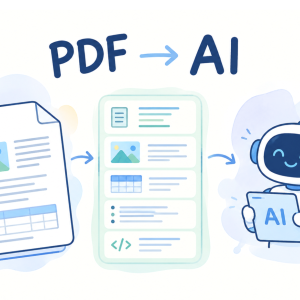
Every organization relies on documents: contracts, financial reports, research papers, compliance filings, insurance policies, technical manuals, and government records. Many of these documents are PDFs. But what happens when these documents become input for AI?
Australian businesses are under pressure to turn AI investment into measurable outcomes: higher productivity, faster decisions and a workforce prepared for a more autonomous way of working. Yet a significant number remain in pilots and proof-of-concepts, unable to move confidently into enterprise-scale deployment.
Imagine hiring the sharpest analyst on the market, handing them a mountain of paperwork, then locking the filing cabinets that hold everything they need to make sense of it: the customer records, the policy and contract history, the account balances, the previous claims, the clinical notes, the fraud flags, the master data that says which version of the truth is the real one.
Large language models will abandon a correct answer if a user repeats a false statement often enough. Some will flip back and forth on the same claim within a single conversation.
A cybersecurity incident that stopped a global medical device manufacturer from making or shipping product has ended with operations fully restored. The one clinical workflow it degraded is working again.
An AI agent compromised roughly 30 companies, exfiltrated 3.1TB of data and drafted the ransom demands. Token costs ran between 40 cents and four dollars per victim.
Australian organisations now have a common vocabulary for describing how sensitive their data is. The same scheme sets out what protection each category warrants, and how that expectation travels when data is shared.
AI systems inside Australian and New Zealand organisations are surfacing sensitive information to people who are not cleared to see it. The problem is now the second most common category of AI security incident in the region according to a new report.
Commonwealth agencies would be barred from automating any decision that requires judgement, under a bill now before the House of Representatives. They would also have to publish the rules, weightings and test results behind every high risk system.
National Australia Bank has been removed from the signatory list of an OpenAI open letter on cyber defence, two days after it appeared as the only Australian organisation endorsing the document.