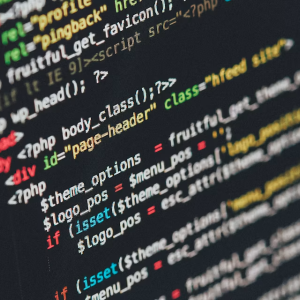
Details have been published of a critical flaw in the programming language PHP, which is the backbone of more than 70% of all websites. Left unfixed, the flaw would allow hackers to easily take over and compromise millions of websites and the information held on their servers. In response, multiple European governments and operators including the Port of Rotterdam have taken websites offline.
Updating WordPress, Drupal or a plugin will not close the PHP flaws that took government websites offline this week. The vulnerable code sits in the PHP engine underneath them, so every server, appliance and hosting platform running PHP has to be found and updated.
Attackers have used a stolen credential from a Microsoft 365 backup service to sign in to hundreds of customer tenants. Because backup tools need broad access to mail, files and directories, the attackers inherited that access.
Data concerns have delayed or derailed AI projects at 86 per cent of organisations in the past 12 months. That is despite 95 per cent naming better use of data to improve business outcomes as a top priority.
A quarter of enterprise security breaches will trace back to AI agent abuse by 2028, Gartner predicts. It blames unmanaged machine privileges and legacy credential practices.
Australian organisations will no longer be able to summarise their cyber security posture with a single Essential Eight maturity level. The Australian Signals Directorate (ASD) has released a principles-based replacement that rates security area by area.
Origin Energy has seen no evidence that customer data taken in its July cyber incident has been published online, but chairman Scott Perkins has told shareholders the risk remains and affected customers must stay alert to scams.
Details have been published of a critical flaw in the programming language PHP, which is the backbone of more than 70% of all websites. Left unfixed, the flaw would allow hackers to easily take over and compromise millions of websites and the information held on their servers. In response, multiple European governments and operators including the Port of Rotterdam have taken websites offline.
Updating WordPress, Drupal or a plugin will not close the PHP flaws that took government websites offline this week. The vulnerable code sits in the PHP engine underneath them, so every server, appliance and hosting platform running PHP has to be found and updated.
Attackers have used a stolen credential from a Microsoft 365 backup service to sign in to hundreds of customer tenants. Because backup tools need broad access to mail, files and directories, the attackers inherited that access.
Data concerns have delayed or derailed AI projects at 86 per cent of organisations in the past 12 months. That is despite 95 per cent naming better use of data to improve business outcomes as a top priority.
A quarter of enterprise security breaches will trace back to AI agent abuse by 2028, Gartner predicts. It blames unmanaged machine privileges and legacy credential practices.
Australian organisations will no longer be able to summarise their cyber security posture with a single Essential Eight maturity level. The Australian Signals Directorate (ASD) has released a principles-based replacement that rates security area by area.
Origin Energy has seen no evidence that customer data taken in its July cyber incident has been published online, but chairman Scott Perkins has told shareholders the risk remains and affected customers must stay alert to scams.
Financial services licensees are answerable for the cyber resilience of their authorised representatives, not just their own systems. Fortnum Private Wealth has been ordered to pay a $A1.35 million penalty for failing to manage cyber risk across its advice network.
The password "123456" has let an attacker into Denmark's national population register resulting in names, addresses and ID numbers for about 8.8 million people being exposed.
Tracking who and what can reach sensitive files is about to sit inside one of the largest email and human-risk security platforms. Proofpoint has agreed to buy Varonis for about $US6.3 billion as AI agents gain broad access to corporate data.