Hackers have stolen around US$6.3 billion (£4.7 billion) from the cryptocurrency exchange Binance, most of which was taken in under an hour. According to Binance, the attack exploited systems and individuals with the authority to carry out transactions involving such large sums.
Agencies that switch on Microsoft 365 Copilot may need their own controls to meet records obligations. New federal guidance warns the service can influence official work without preserving the prompts, outputs or context behind it.
A Commonwealth contract that banned offshore access to court data did not stop overseas transcribers reaching it. Australia's privacy regulator says the fault lay in an access-control error, not in the contract.
Attackers have begun running intrusions through AI coding assistants already approved on a victim's device. Their commands then inherit the trust the organisation gave the tool.
AI is often discussed in terms of what it might replace. But perhaps we’re asking the wrong question. What if its real value is not replacing human expertise, but extending what skilled people are capable of?
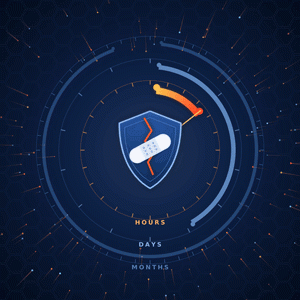
Organisations now have days, and sometimes only hours, to patch new vulnerabilities before AI-assisted attackers exploit them, Australia's cyber security agency has warned.
Commonwealth agencies would be barred from automating any decision that requires judgement, under a bill now before the House of Representatives. They would also have to publish the rules, weightings and test results behind every high risk system.
National Australia Bank has been removed from the signatory list of an OpenAI open letter on cyber defence, two days after it appeared as the only Australian organisation endorsing the document.
On Monday, the Australian government released draft legislation for the next big overhaul of the Privacy Act. The Privacy Amendment (Personal Data Protection) Bill 2026 is now out for public comment, together with a consultation paper. It is the second instalment (or “tranche”) of privacy reform , and it is the one that matters most.
AI is an accountability issue, not a technology one. Most organisations can say what an AI tool produced. Very few can say what evidence backs that result. As AI moves into everyday decisions, that gap is the real risk, not whether the technology works.
The US is currently considering a new AI ‘kill switch’ law following an agent going rogue and engaging in unauthorised cyber activities. The proposed law would require developers to maintain the ability to slow, suspend or shut down high-risk AI systems.
Shares in Objective Corporation have continued their slide since the firm announced on July 1 that Defence Digital Group would not renew a support agreement running since 1999. The company has since shed about 40 per cent of its value.
Organisations relying on Microsoft 365 Information Barriers to enforce an ethical wall should not assume the controls cover email. Testing has found the feature blocks Teams, OneDrive and SharePoint, but does not prevent email communication in Exchange Online.
Nearly two thirds of organisations using intelligent document processing expect to change their approach within a year according to new data from analysts IDC. That is heavy churn in a market the hyperscale providers currently dominate.
Most vulnerability tooling stops at the report. A partnership announced this week is aimed at what happens next, using automation to prioritise and close gaps across infrastructure, platforms and applications.
An open letter signed by 127 technology, security and financial services organisations says the security posture most enterprises run today will not hold. AI-enabled attacks will overwhelm it within months, the letter argues. One Australian organisation has signed.