Commonwealth agencies would be barred from automating any decision that requires judgement, under a bill now before the House of Representatives. They would also have to publish the rules, weightings and test results behind every high risk system.
Large language models will abandon a correct answer if a user repeats a false statement often enough. Some will flip back and forth on the same claim within a single conversation.
A cybersecurity incident that stopped a global medical device manufacturer from making or shipping product has ended with operations fully restored. The one clinical workflow it degraded is working again.
An AI agent compromised roughly 30 companies, exfiltrated 3.1TB of data and drafted the ransom demands. Token costs ran between 40 cents and four dollars per victim.
Australian organisations now have a common vocabulary for describing how sensitive their data is. The same scheme sets out what protection each category warrants, and how that expectation travels when data is shared.
AI systems inside Australian and New Zealand organisations are surfacing sensitive information to people who are not cleared to see it. The problem is now the second most common category of AI security incident in the region according to a new report.
National Australia Bank has been removed from the signatory list of an OpenAI open letter on cyber defence, two days after it appeared as the only Australian organisation endorsing the document.
Western Sydney University has given every staff member enterprise-grade Microsoft 365 Copilot access. It is the first university in New South Wales and the second in Australia to do so.
Configuration-led approaches to Microsoft 365 governance are no longer sufficient, according to new research from Info-Tech Research Group. The spread of AI tools such as Copilot is making the weaknesses harder to ignore.
The alleged hacker who claimed access to two million Origin Energy customer records says a private settlement has been reached with the company and no data will be published. Origin has separately confirmed that customer data was accessed and disclosed.
A Sydney-based Microsoft specialist Informotion has been ranked alongside global systems integrators including Accenture, Avanade, Capgemini and TCS in a new analyst assessment
Enterprises are collecting the right volume of data in only a reported 2 per cent of legal matters. AI prompts, system responses and AI-generated outputs are creating a new class of discoverable records that traditional discovery tools were not built to handle.
Qantas has dodged penalties that could have run into billions of dollars after simple human error was found to be the cause of the massive 2025 data breach that affected millions of customers, and ISO27001 compliance failed to prevent.
Picture two finance managers in the autumn of 2027, one in Manchester and one in Lyon, doing exactly the same thing: exporting an invoice as a tidy, letterheaded PDF and emailing it to a domestic business customer. In Manchester, this is still a perfectly ordinary invoice and will remain one until April 2029. In Lyon, it stopped being one a year earlier.
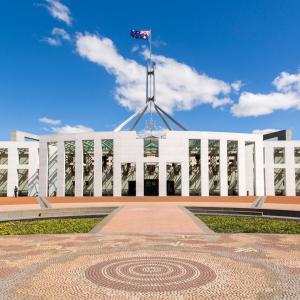
The department that operates the Australian Parliament House's computing network has implemented seven of the mandatory Essential Eight cyber security strategies below the required standard, the Australian National Audit Office has found.
Organisations running on-premises SharePoint should patch immediately and hunt for signs of compromise, after the US Cybersecurity and Infrastructure Security Agency (CISA) confirmed active exploitation of three vulnerabilities affecting every supported version of the platform.
Russian state-sponsored actors are exploiting poorly configured and unpatched network devices across critical infrastructure worldwide, using weaknesses as basic as default SNMP community strings, a 20-agency international advisory warns.