Industry Insider

  • Imperial War Museums Preservation of Invaluable Historical Assets

    The UK’s Imperial War Museums (IWM) has deployed Spectra StorCycle Storage Lifecycle Management Software to enhance its existing storage infrastructure, which supports its audio-visual and exhibitions departments to preserve invaluable data, including thousands of films, videotapes, audio recordings and photographs that would otherwise disintegrate and be lost forever were they not digitised.

  • Australian small businesses stuck in digital dark ages: CPA

    Australian small businesses are less likely to invest in, use, earn from or offer customers the use of digital technologies than their Asia-Pacific counterparts, according to CPA Australia, the professional accounting organisation. CPA Australia surveyed 4,227 businesses in 11 markets about their operations and plans. Australian small businesses won the “wooden spoon” for digital transformation


  • What Is the Difference Between No-Code and Low-Code Development Tools?

    The overused terms “low-code” and “no-code” are confusing application and software engineering leaders about which development tools to choose. Leaders should focus on evaluating these tools based on their fit to use cases and skill sets, rather than the labels used to describe the products.

  • How to Align IT and Business Objectives During Digital Transformation

    In the era of digital transformation initiatives, it’s easy to view the myriad of jobs that computers perform in a myriad of industries as magic. Many employees can’t look at a program or other digital tools and know-how it does what it does or how difficult it can be for everything to work the way it should. When encountering a problem, an employee will typically venture over to information technology (IT) and state their problem. IT will take a look at the said problem and fix it with a minute of typing and a snap of their fingers, again, just like magic. 

  • Skilja unlocks the power of Intelligent Document Processing (IDP)

    The year 2020 was a wakeup call for cloud adoption and digital transformation. Intelligent Document Processing, or IDP, is increasingly seen as a critical next step to increasing process automation and handling the huge amount of inflowing data. But what is IDP exactly? To learn more IDM spoke with Alexander Goerke, CEO and Founder of Skilja, a company developing essential technologies for understanding documents.  

  • What are the essential ingredients of Capture 2.0?

    The teaming of advanced machine learning technologies with traditional OCR and Robotic Process Automation (RPA), is providing new possibilities for organisations overwhelmed with processing a digital deluge of messages and documents. Frank Volckmar, Managing Director of TCG Australia and New Zealand, believes the possibilities unleashed by these new cutting-edge technologies have unleashed a new paradigm, variously described as ‘Hyperautomation’ or ‘Capture 2.0’.

  • California adopts AI-Based bushfire detection

    California's Sonoma County has turned to South Korean visual recognition AI firm, Alchera Inc. to provide early warning alerts of pending “wildfire” events (commonly described in Australia as bushfires).  Alchera will offer consulting services to develop and deliver products utilizing state-of-the-art fire detection technologies based on machine learning with Artificial Intelligence (AI). The firm's visual anomaly detection solution can detect the start of a wildfire from a simple video.

  • [Review] Kodak S3100f Scanner from Kodak Alaris

    Kodak Alaris has expanded its document capture portfolio with the launch of a new line of low-volume production scanners. IDM took a look at a model in the new Kodak S3000 series which provides the entry level into A3 scanning.

  • Security flaws in Microsoft email software raise questions over Australia's cybersecurity approach

    On March 2, 2021, Microsoft published information about four critical vulnerabilities in its widely used Exchange email server software that are being actively exploited. It also released security updates for all versions of Exchange back to 2010. Microsoft has told cybersecurity expert Brian Krebs it was notified of the vulnerabilities in “early January”. The Australian Cyber Security Centre has also issued a notice on the vulnerabilities.

  • Imperial War Museums Preservation of Invaluable Historical Assets

    The UK’s Imperial War Museums (IWM) has deployed Spectra StorCycle Storage Lifecycle Management Software to enhance its existing storage infrastructure, which supports its audio-visual and exhibitions departments to preserve invaluable data, including thousands of films, videotapes, audio recordings and photographs that would otherwise disintegrate and be lost forever were they not digitised.

  • Australian small businesses stuck in digital dark ages: CPA

    Australian small businesses are less likely to invest in, use, earn from or offer customers the use of digital technologies than their Asia-Pacific counterparts, according to CPA Australia, the professional accounting organisation. CPA Australia surveyed 4,227 businesses in 11 markets about their operations and plans. Australian small businesses won the “wooden spoon” for digital transformation
  • What Is the Difference Between No-Code and Low-Code Development Tools?

    The overused terms “low-code” and “no-code” are confusing application and software engineering leaders about which development tools to choose. Leaders should focus on evaluating these tools based on their fit to use cases and skill sets, rather than the labels used to describe the products.

  • How to Align IT and Business Objectives During Digital Transformation

    In the era of digital transformation initiatives, it’s easy to view the myriad of jobs that computers perform in a myriad of industries as magic. Many employees can’t look at a program or other digital tools and know-how it does what it does or how difficult it can be for everything to work the way it should. When encountering a problem, an employee will typically venture over to information technology (IT) and state their problem. IT will take a look at the said problem and fix it with a minute of typing and a snap of their fingers, again, just like magic. 

  • Skilja unlocks the power of Intelligent Document Processing (IDP)

    The year 2020 was a wakeup call for cloud adoption and digital transformation. Intelligent Document Processing, or IDP, is increasingly seen as a critical next step to increasing process automation and handling the huge amount of inflowing data. But what is IDP exactly? To learn more IDM spoke with Alexander Goerke, CEO and Founder of Skilja, a company developing essential technologies for understanding documents.  

  • What are the essential ingredients of Capture 2.0?

    The teaming of advanced machine learning technologies with traditional OCR and Robotic Process Automation (RPA), is providing new possibilities for organisations overwhelmed with processing a digital deluge of messages and documents. Frank Volckmar, Managing Director of TCG Australia and New Zealand, believes the possibilities unleashed by these new cutting-edge technologies have unleashed a new paradigm, variously described as ‘Hyperautomation’ or ‘Capture 2.0’.

  • California adopts AI-Based bushfire detection

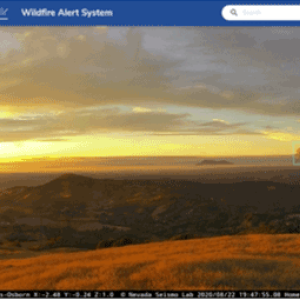
    California's Sonoma County has turned to South Korean visual recognition AI firm, Alchera Inc. to provide early warning alerts of pending “wildfire” events (commonly described in Australia as bushfires).  Alchera will offer consulting services to develop and deliver products utilizing state-of-the-art fire detection technologies based on machine learning with Artificial Intelligence (AI). The firm's visual anomaly detection solution can detect the start of a wildfire from a simple video.

  • [Review] Kodak S3100f Scanner from Kodak Alaris

    Kodak Alaris has expanded its document capture portfolio with the launch of a new line of low-volume production scanners. IDM took a look at a model in the new Kodak S3000 series which provides the entry level into A3 scanning.

  • Security flaws in Microsoft email software raise questions over Australia's cybersecurity approach

    On March 2, 2021, Microsoft published information about four critical vulnerabilities in its widely used Exchange email server software that are being actively exploited. It also released security updates for all versions of Exchange back to 2010. Microsoft has told cybersecurity expert Brian Krebs it was notified of the vulnerabilities in “early January”. The Australian Cyber Security Centre has also issued a notice on the vulnerabilities.