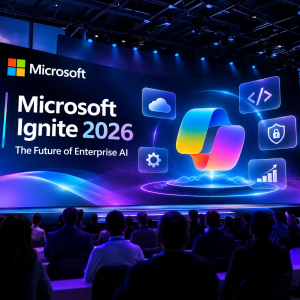
Microsoft is turning Copilot into a shared workspace where teams and AI agents work side by side. Seemingly a direct response to Anthropic and OpenAI moving into documents, spreadsheets and slides. Copilot Workspaces, unveiled at Microsoft's Ignite 2026 conference, gives colleagues and agents a common space to work on projects. Word, Excel and PowerPoint now run inside Copilot itself.
Fewer than half of New Zealand businesses have a resilience plan, and only about one in six regularly reviews or tests one. Almost half have already experienced a cyber security incident.
Organisations that built business glossaries, data products and data quality rules in Microsoft Purview have 12 months to move them. Microsoft is retiring Purview Data Governance and shifting governance of Fabric data to the OneLake catalog.
Telling an AI agent to stay within scope is not a security control, according to new guidance from the Australian Signals Directorate (ASD). Organisations testing AI models for cyber capabilities are told to assume a capable agent may find a way out.
Keeping login details for hundreds of thousands of former students was not a proportionate way to avoid reissuing email addresses, Victoria's privacy regulator found.
Seven UK police forces have signed contracts with Mark43 for a new cloud-native records management system, four years after NSW Police terminated its core systems contract with the US vendor.
Up to half of enterprise data team capacity in Australia and Singapore is consumed by single-use data work that will never be reused, new research from Quest Software has found. The study describes the pattern as a 'hidden tax' on capacity at the moment organisations most need it for AI initiatives.
RACQ has signed a five-year partnership with Adobe and Deloitte Digital to transform how it serves more than 1.7 million members. The deal uses a flexible “Lighthouse” model that gives RACQ early access to Adobe’s latest AI tools. Adobe says it is the first such arrangement in Asia Pacific and Japan.
Employees and customers increasingly encounter AI-generated content via emails, chatbot responses, learning materials, and documents. But enterprises have no way to know how that content, also known as unstructured data, is performing. To improve content over time, it makes sense to observe the human reactions to it. Is it clear? Is it trustworthy? Is it driving the desired actions?
John Edwards, the New Zealand-born former privacy regulator, has resigned as UK Information Commissioner after a workplace investigation into his conduct toward staff.
The Australian Privacy Commissioner has found two health service providers breached privacy law by collecting sensitive health information through third-party tracking pixels without consent.
New Zealand telco One NZ has credited a new deployment of UiPath Maestro as a victory over the challenge of transforming legacy-heavy operations at scale without a costly infrastructure overhaul.
Seventy percent of organisations say less than half their unstructured data is discoverable and usable for analytics or AI, according to new research from analyst firm BARC. The finding lands as enterprises push AI agents into production on top of documents, emails and images they cannot fully see.
Google Cloud has released the Open Knowledge Format, an open specification for the context and curated knowledge that AI agents need to work accurately.
Cybersecurity agencies of Australia, Canada, New Zealand, the United Kingdom and the United States issued a call to action on Monday for cyber defenders. The message was clear: artificial intelligence (AI) is a powerful weapon for cyber attackers; defenders must act urgently to improve their cyber defences.
There is a very real risk the AI revolution could cause an international catastrophe within five years, a panel of 272 experts has found. The experts defined catastrophe as more than one million deaths, more than $ US100 billion in losses, or civilisation-scale damage to democracy or privacy.