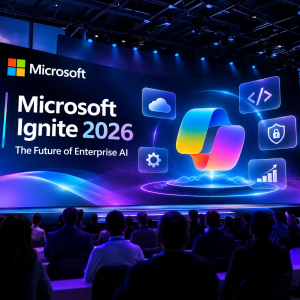
Microsoft is turning Copilot into a shared workspace where teams and AI agents work side by side. Seemingly a direct response to Anthropic and OpenAI moving into documents, spreadsheets and slides. Copilot Workspaces, unveiled at Microsoft's Ignite 2026 conference, gives colleagues and agents a common space to work on projects. Word, Excel and PowerPoint now run inside Copilot itself.
Fewer than half of New Zealand businesses have a resilience plan, and only about one in six regularly reviews or tests one. Almost half have already experienced a cyber security incident.
Organisations that built business glossaries, data products and data quality rules in Microsoft Purview have 12 months to move them. Microsoft is retiring Purview Data Governance and shifting governance of Fabric data to the OneLake catalog.
Telling an AI agent to stay within scope is not a security control, according to new guidance from the Australian Signals Directorate (ASD). Organisations testing AI models for cyber capabilities are told to assume a capable agent may find a way out.
Keeping login details for hundreds of thousands of former students was not a proportionate way to avoid reissuing email addresses, Victoria's privacy regulator found.
Seven UK police forces have signed contracts with Mark43 for a new cloud-native records management system, four years after NSW Police terminated its core systems contract with the US vendor.
The reference model that has defined electronic discovery practice since 2005 is being redrawn for the AI era, with information governance as its foundation, disposition elevated to a core phase and analysis extended across the entire discovery lifecycle. Public comment on EDRM 2.0 is open until 30 July 2026.
The core leadership question for enterprise AI is no longer "can we build an agent?" but "can we delegate decisions safely at scale?", according to a new Capgemini point of view on agentic process automation. The consultancy argues organisations that succeed treat agentic automation as an operating-model change rather than a one-time tooling upgrade.
By 2028, 70 per cent of US healthcare payers will address workflow, data and service automation using no-code agent builders, cutting manual workloads by 50 per cent, Gartner predicts. The forecast signals a broader shift: AI agent development moving from centralised IT projects to business-led automation, with governance the deciding factor between value and risk.
Australian organisations are delegating decision-making to AI systems faster than their governance frameworks can support, with half of C-suite leaders prepared to hand AI more autonomy than their current controls allow, new research from Insight Enterprises has found.
Nearly three-quarters of IT leaders say a lack of real-time data infrastructure is stalling their efforts to scale AI, and only 32 per cent have agentic AI in production, according to Confluent's 2026 Data Streaming Report.
New Zealand should move from voluntary cyber security guidelines to enforceable legislation, including mandatory reporting of major cyber attacks, according to a new policy push that would shift responsibility for digital safety from individuals to the systems and platforms they rely on.
More than half of successful messaging scams are completed within 30 minutes of first contact, and one in seven is over in less than five minutes, according to a new Kaspersky investigation into the global messaging scam economy. The average loss per victim is US$733.
Most enterprises are locked into AI systems they cannot easily change, and the overwhelming majority do not fully understand their own AI dependencies, a new global study warns. The findings elevate AI sovereignty from a technical concern to a business continuity issue.
Nearly three-quarters of large enterprises use AI regularly or across most business processes, but only 10 per cent say AI is core to how their business operates, a global survey has found. The gap suggests adoption is no longer the challenge - organisational transformation is.
Law firms risk a crisis of 'cognitive surrender' as lawyers treat artificial intelligence as a definitive authority rather than a tool, a new behavioural science study warns. The research finds machine dependence is impairing professional judgment, particularly among junior lawyers using automation for routine work.