Hackers have stolen around US$6.3 billion (£4.7 billion) from the cryptocurrency exchange Binance, most of which was taken in under an hour. According to Binance, the attack exploited systems and individuals with the authority to carry out transactions involving such large sums.
Agencies that switch on Microsoft 365 Copilot may need their own controls to meet records obligations. New federal guidance warns the service can influence official work without preserving the prompts, outputs or context behind it.
A Commonwealth contract that banned offshore access to court data did not stop overseas transcribers reaching it. Australia's privacy regulator says the fault lay in an access-control error, not in the contract.
Attackers have begun running intrusions through AI coding assistants already approved on a victim's device. Their commands then inherit the trust the organisation gave the tool.
AI is often discussed in terms of what it might replace. But perhaps we’re asking the wrong question. What if its real value is not replacing human expertise, but extending what skilled people are capable of?
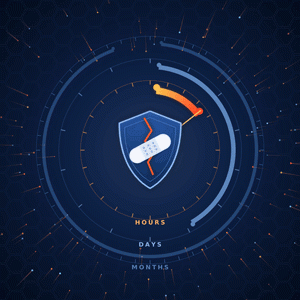
Organisations now have days, and sometimes only hours, to patch new vulnerabilities before AI-assisted attackers exploit them, Australia's cyber security agency has warned.
Artificial intelligence, post-quantum cryptography and the proliferation of non-human digital identities are driving a fundamental shift in enterprise cybersecurity risk, according to a new report by KPMG International. The Cybersecurity Considerations 2026 report - drawing on insights from more than 20 KPMG cyber experts and senior leaders from Google, Microsoft, Palo Alto Networks, and ServiceNow - identifies eight priority areas demanding urgent attention from enterprise security leaders.
Anthropic has expanded Project Glasswing, its AI-powered cybersecurity vulnerability program, to approximately 150 new organisations across more than 15 countries - with Australia and New Zealand among the nations included in the second cohort, according to reporting by the Financial Times. Anthropic has not publicly confirmed the country list.
The financial services industry has become the most targeted by network-layer distributed denial-of-service (DDoS) attacks, new Akamai research has found.
ANZ organisations are reshaping resilience strategies as AI agents widen the attack surface, AvePoint ANZ Managing Director Max McNamara told a Sydney Gartner audience.
Australia's privacy regulator has opened consultation on guidance for new transparency rules. The rules will force organisations to disclose how they use automated decision-making (ADM) systems.
New Zealand’s Privacy Commissioner has found both a major private patient portal vendor and the country’s central public health agency in breach of patient privacy laws, following a December 2025 cyber incident that exposed the sensitive records of nearly 100,000 people.
A terabit-scale DDoS attack took Australia’s largest privately-owned Web host offline on Saturday 23 May. The takedown has laid bare a regulatory gap that forces enterprise and government customers to fund the country’s DDoS defences themselves.
The Australian Digital Health Agency (ADHA) concedes adoption of standards remains “sporadic” more than two decades after foundational digital health work began in Australia but claims a new framework will drive uptake.
Most organisations are accelerating artificial intelligence investment without the data foundations needed to support it, a global benchmark study has found.
More than half of enterprise AI projects are failing to deliver their objectives, with poor unstructured data management identified as the primary blocker, new Nasuni research has found.