Details have been published of a critical flaw in the programming language PHP, which is the backbone of more than 70% of all websites. Left unfixed, the flaw would allow hackers to easily take over and compromise millions of websites and the information held on their servers. In response, multiple European governments and operators including the Port of Rotterdam have taken websites offline.
Updating WordPress, Drupal or a plugin will not close the PHP flaws that took government websites offline this week. The vulnerable code sits in the PHP engine underneath them, so every server, appliance and hosting platform running PHP has to be found and updated.
Attackers have used a stolen credential from a Microsoft 365 backup service to sign in to hundreds of customer tenants. Because backup tools need broad access to mail, files and directories, the attackers inherited that access.
Data concerns have delayed or derailed AI projects at 86 per cent of organisations in the past 12 months. That is despite 95 per cent naming better use of data to improve business outcomes as a top priority.
A quarter of enterprise security breaches will trace back to AI agent abuse by 2028, Gartner predicts. It blames unmanaged machine privileges and legacy credential practices.
Australian organisations will no longer be able to summarise their cyber security posture with a single Essential Eight maturity level. The Australian Signals Directorate (ASD) has released a principles-based replacement that rates security area by area.
Origin Energy has seen no evidence that customer data taken in its July cyber incident has been published online, but chairman Scott Perkins has told shareholders the risk remains and affected customers must stay alert to scams.
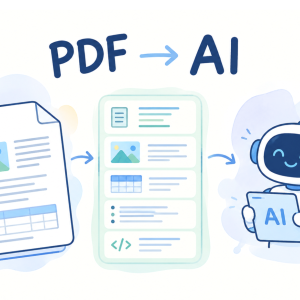
Every organization relies on documents: contracts, financial reports, research papers, compliance filings, insurance policies, technical manuals, and government records. Many of these documents are PDFs. But what happens when these documents become input for AI?
Australian businesses are under pressure to turn AI investment into measurable outcomes: higher productivity, faster decisions and a workforce prepared for a more autonomous way of working. Yet a significant number remain in pilots and proof-of-concepts, unable to move confidently into enterprise-scale deployment.
Imagine hiring the sharpest analyst on the market, handing them a mountain of paperwork, then locking the filing cabinets that hold everything they need to make sense of it: the customer records, the policy and contract history, the account balances, the previous claims, the clinical notes, the fraud flags, the master data that says which version of the truth is the real one.
Large language models will abandon a correct answer if a user repeats a false statement often enough. Some will flip back and forth on the same claim within a single conversation.
A cybersecurity incident that stopped a global medical device manufacturer from making or shipping product has ended with operations fully restored. The one clinical workflow it degraded is working again.
An AI agent compromised roughly 30 companies, exfiltrated 3.1TB of data and drafted the ransom demands. Token costs ran between 40 cents and four dollars per victim.
Australian organisations now have a common vocabulary for describing how sensitive their data is. The same scheme sets out what protection each category warrants, and how that expectation travels when data is shared.
AI systems inside Australian and New Zealand organisations are surfacing sensitive information to people who are not cleared to see it. The problem is now the second most common category of AI security incident in the region according to a new report.
Commonwealth agencies would be barred from automating any decision that requires judgement, under a bill now before the House of Representatives. They would also have to publish the rules, weightings and test results behind every high risk system.
National Australia Bank has been removed from the signatory list of an OpenAI open letter on cyber defence, two days after it appeared as the only Australian organisation endorsing the document.