Fujitsu Laboratories has announced newly developed technology that offers both high speed data-processing and high-capacity storage in distributed storage systems, in order to speed up the processing of ever-increasing volumes of data.
Over the course of regular business activities, organizations collect large sum of data and all too often fail to utilize this information. All this unnecessary data not only adds to maintenance costs, but also makes the organization susceptible to greater risks.
Four members of an alleged coordinated fraud syndicate have been charged as part of ongoing investigations into business email compromise scams across NSW.
The NSW Police Force - Australia's oldest and largest police organisation and one of the biggest in the English-speaking world – has been on a quest to move from a hard copy paradigm into digital information management. At Micro Focus Realize 2018, Jeff Greenwood, Manager, Process and Records Services, NSW Police Force, outlined the story so far.
Some 70% of businesses worldwide failed to address requests made from individuals seeking to obtain a copy of their personal data as required by GDPR (General Data Protection Regulation) within the one-month time limit set out in the regulations, reveals new research from Talend, a developer of cloud data integration solutions.
PwC Germany and young European tech company Cortical.io have recently signed a joint business relationship agreement whereby PwC becomes partner of Cortical.io and develops natural language understanding solutions using Cortical.io’s technology.
One of the world’s largest oil and gas technology and services companies has used Archive360’s FastCollect for Archives and its Archive2Azure to find, migrate and manage all of its data from aging and/or end of life (EOL) systems into the Microsoft Cloud.
Software as a service (SaaS) remains the largest segment of the cloud market, with worldwide revenue expected to grow 17.8 percent to reach $US85.1 billion in 2019, according to Gartner, Inc. The Australian figure is predicted to be $A3.3 billion.
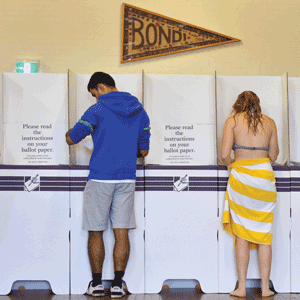
The civic experience of interacting with analogue voting interfaces is as Australian as the democracy sausage. Voters are confronted with tiny pencils, plus physical security measures that involve huddling in a cardboard booth and origami-scale folding. The use of paper ballots – and human counting of those ballots – creates one of the most secure electoral systems imaginable.
It’s unlikely these days that any medium or large organisation’s business plan would not include the goals of increasing efficiency and timeliness of delivery, as well as reducing risk. If information is the new oil, digitisation is the pump.